


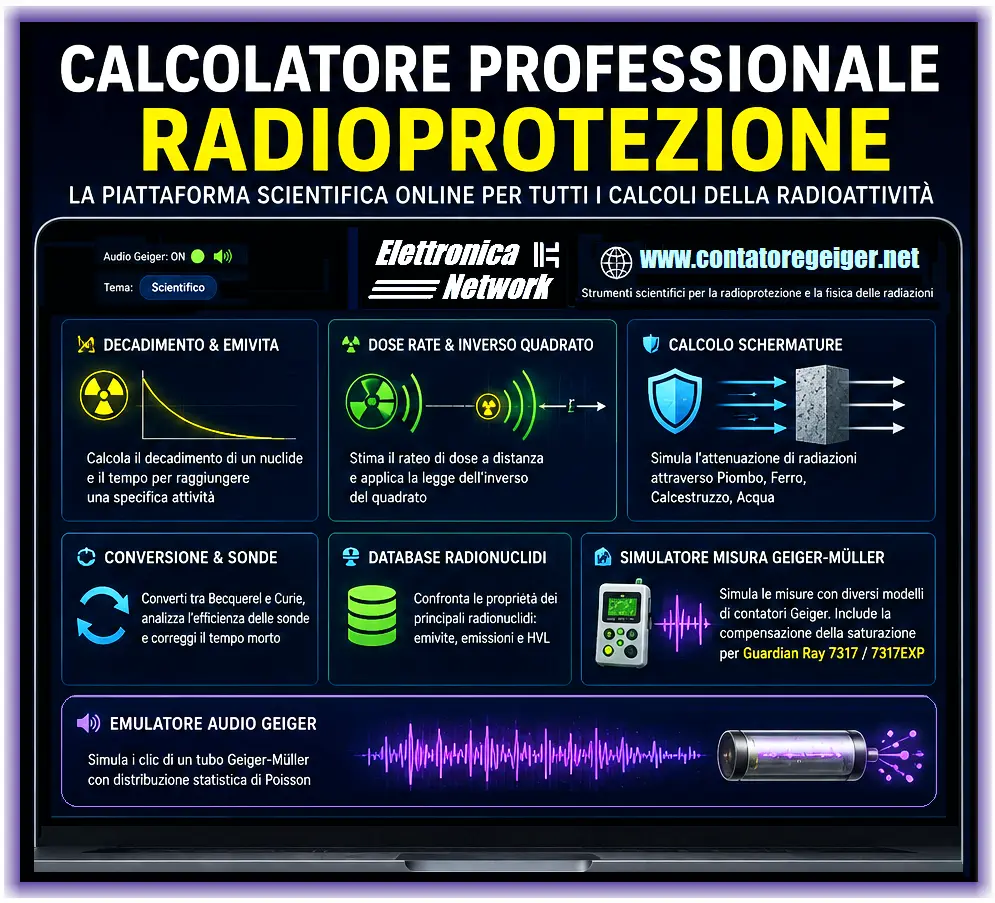
What our Radiation Protection Calculator is and how it works?
The Professional Online Radiation Protection Calculator developed by ElettronicaNetwork is a free advanced scientific platform for the online calculation and simulation of radioactivity, Dosimetry and measurements with the Geiger Counter
The application was born from the experience gained in developing our own Professional Geiger counters with Geiger-Müller Pancake probe, integrates proprietary mathematical algorithms, consolidated physical models and simulation tools intended for industry professionals, laboratories, university, public research bodies, radiation protection technicians and enthusiasts who wish to better understand the behavior of ionizing radiation.
All calculations are performed online directly in the browser without installing additional software and are immediately available from your computer, tablet e smartphone.

Calculation of radioactive decay
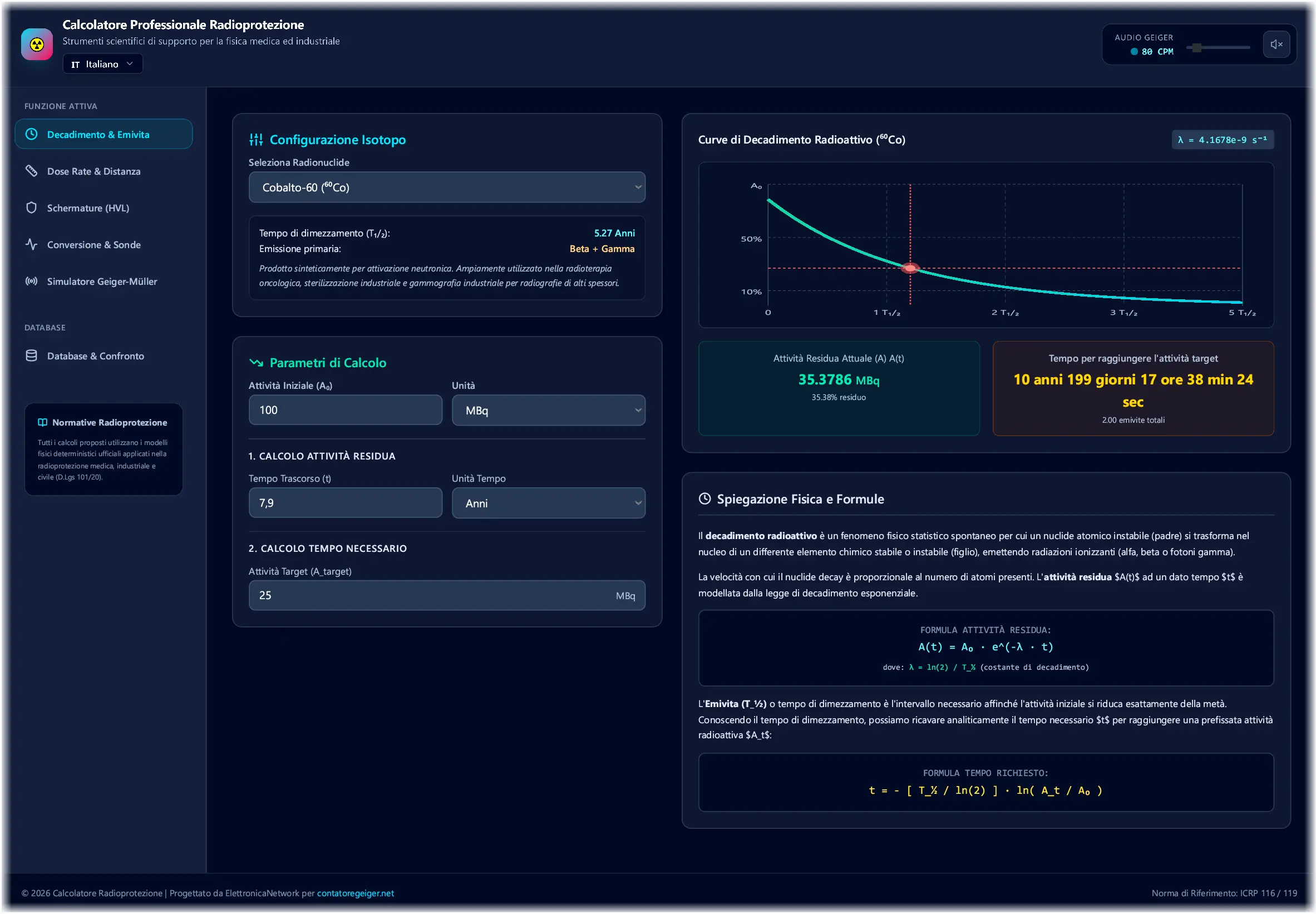
E’ one of the main modules of the platform that allows you to calculate the temporal decay of a radioactive source using the exponential law of nuclear decay.
The software allows you to determine:
- residual activity after a period of time;
- time needed to achieve a specific activity;
- number of half-lives elapsed;
- decay constant of the radionuclide.
An interactive graph represents the decay curve by highlighting the point corresponding to the selected parameters in real time, facilitating the understanding of the exponential behavior of radionuclides.
Calculation of the Dose Rate and inverse square law
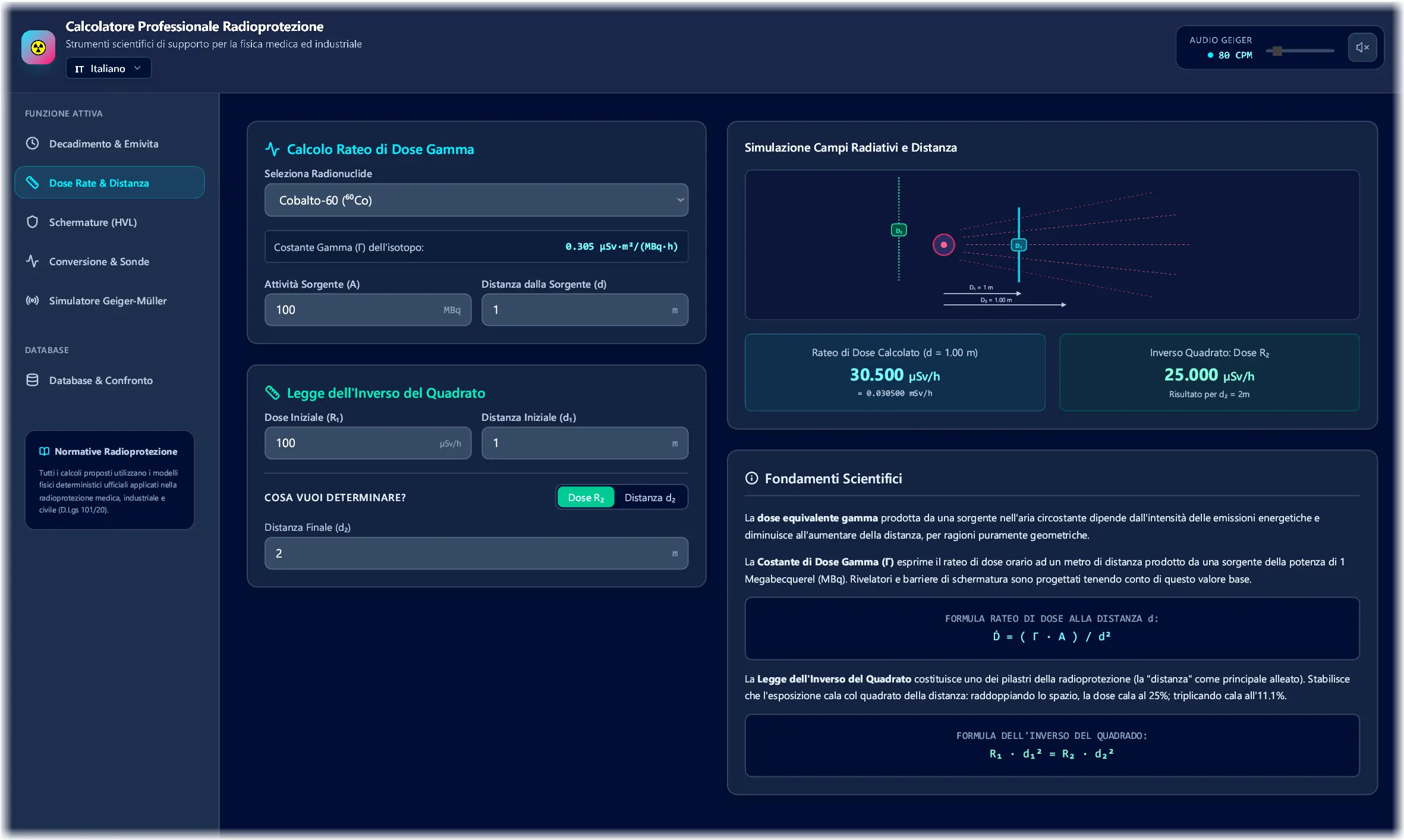
This module allows you to estimate the equivalent dose rate produced by a radioactive source using the characteristic gamma constants of the main radionuclides.
The application implements the law of the inverse square of the distance allowing you to quickly evaluate how the dose rate varies as the distance from the source varies.
The graphic simulator visually represents the radiation distribution and constitutes a useful support for both professional applications and educational purposes.
Ionizing radiation shielding simulator
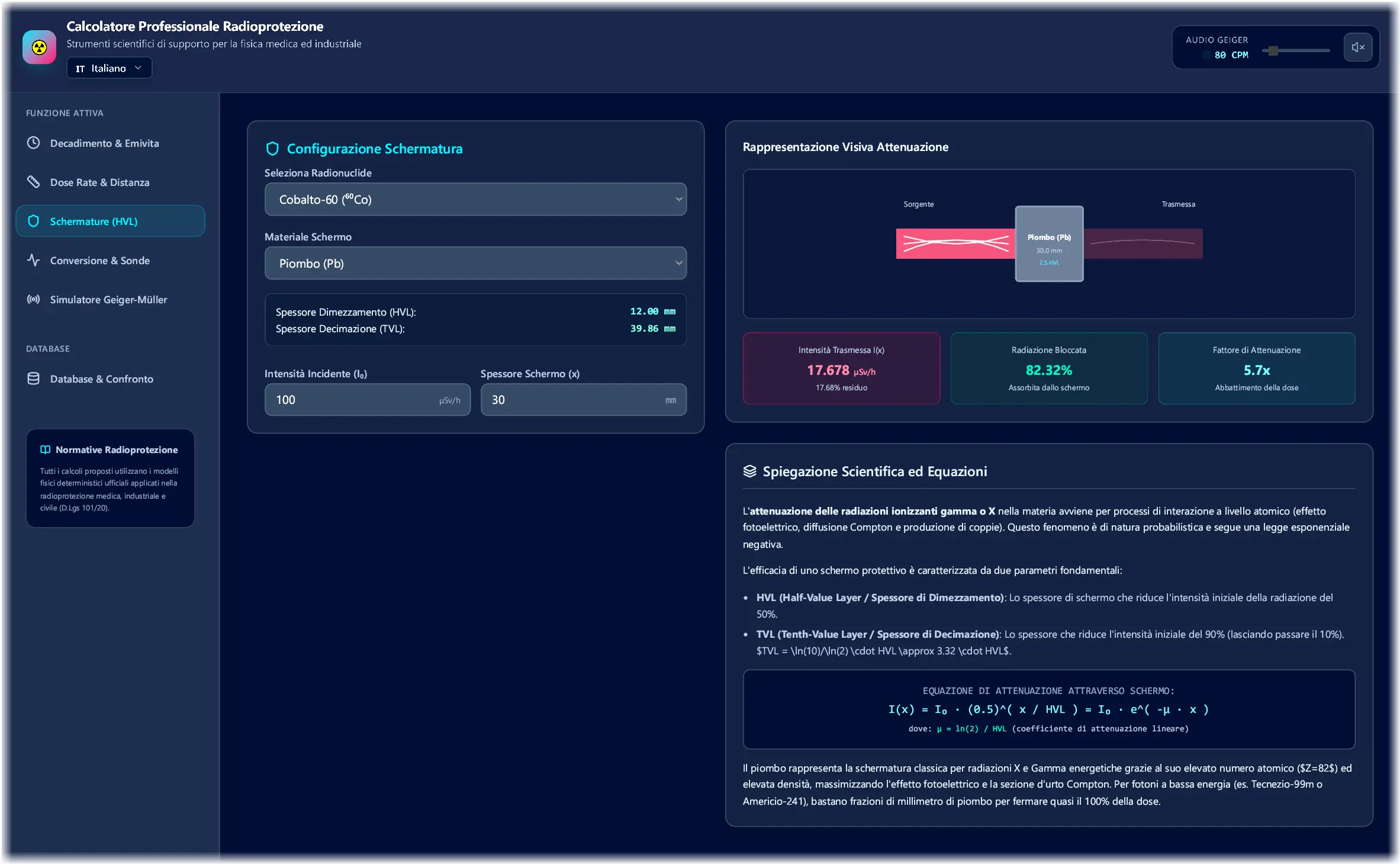
The module dedicated to shielding allows you to evaluate the effectiveness of different protective materials against ionizing radiation.
Simulations are available with:
- Lead
- Ferro
- Concrete
- Water
The algorithm uses halving weights (HVL) and tenfold (TVL) to estimate the residual intensity of the beam after crossing the screen.
The graphic simulation updates the radiation attenuation in real time as the selected thickness varies.
Radiation Protection Calculator. Radiometric conversions, dead time and probe efficiency
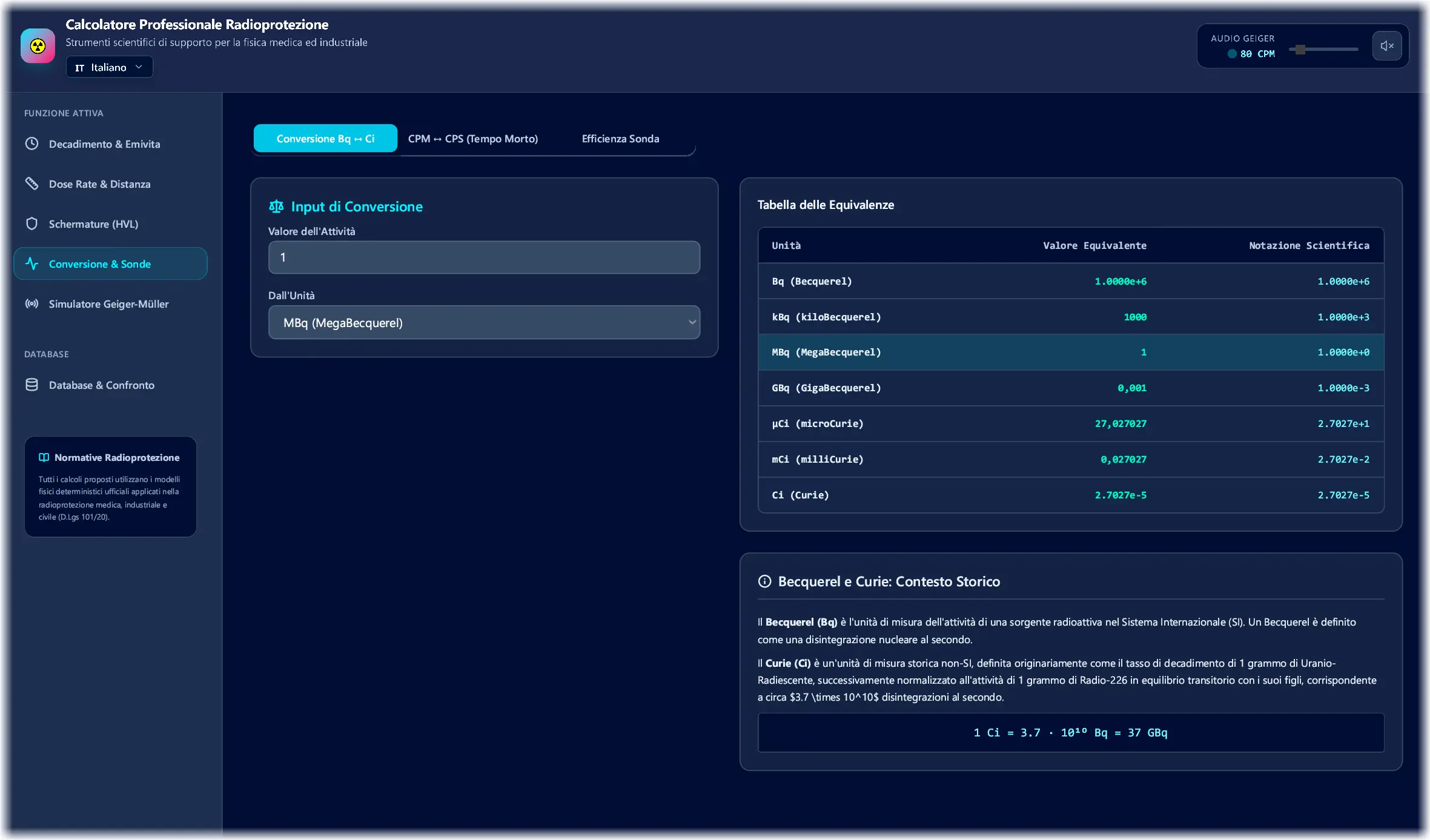
The platform integrates numerous conversion tools used daily in radiation protection.
Among the available functions:
- Becquerel ↔ Curie conversion;
- automatic management of SI prefixes;
- rapid conversions of the main radiometric units;
- calculation of the absolute efficiency of Geiger-Müller probes;
- dead time correction using non-paralyzable model.
These tools allow you to quickly carry out processing normally carried out with specialist software.
Radionuclide Database
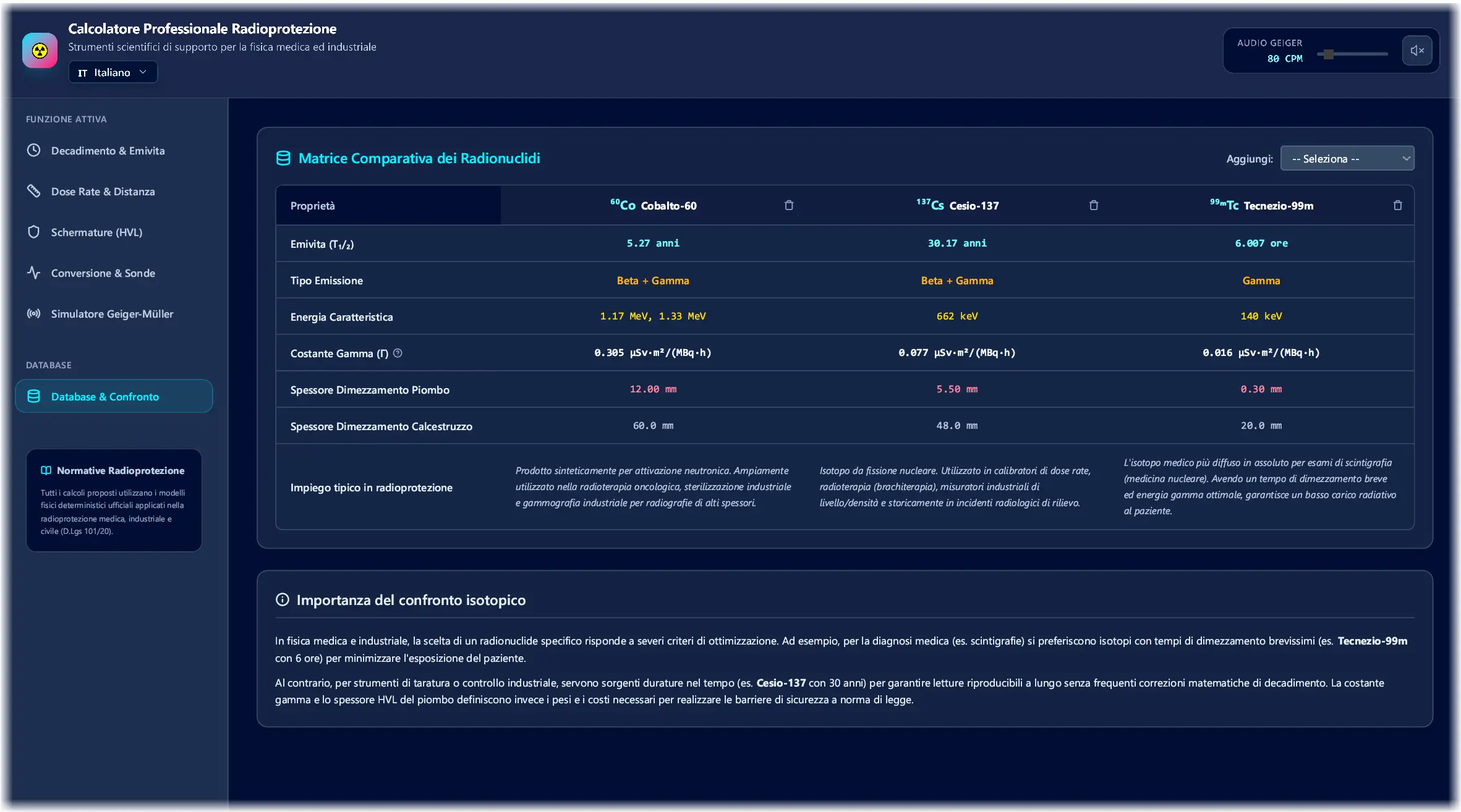
The integrated database allows you to quickly compare numerous radionuclides of scientific and industrial interest.
For each isotope relevant information is available:
- half-life;
- main radiations emitted;
- characteristic energies;
- constants used in dosimetric calculations;
- parameters used in the simulations.
The database constitutes a useful reference during study activities, research and design.
Calculation of Kerma in air and probe calibration coefficient
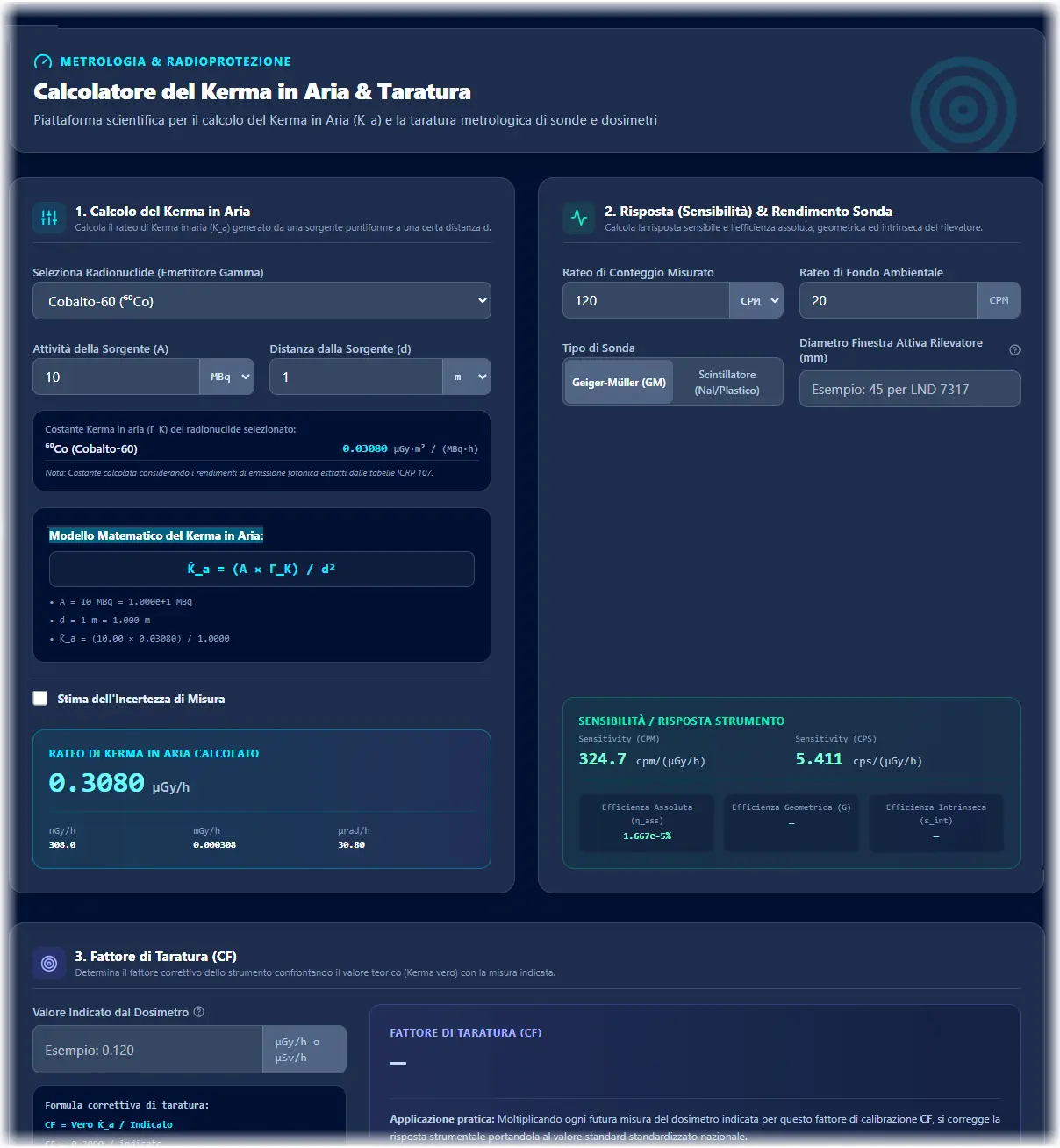
New important section implemented: Cream & Probe calibration and in the navigation menu, both in the interactive flow of the application. The functionality is also fully integrated in five languages and is ready to use.
Here is an overview of the details implemented:
Calculation of Kerma in Air (): Allows you to select a radionuclide from the database (excluding pure beta emitters) and enter your known activity and a distance. The system instantly calculates the theoretical Kerma rate in the air applying the physical formula with the related specific constants extracted from the ICRP tables.
Response and Performance of the Probe: Allows you to enter the counting rate measured by the instrument (in CPM o CPS) and the natural background to obtain the actual sensitivity of the instrument. You can optionally enter the detector window diameter to automatically calculate l’Absolute Efficiency, Geometric ed Intrinsic real value of the probe (both for Geiger-Müller tubes and for scintillators).
Calibration Factor (): Assists the user in obtaining the dimensionless calibration correction factor by comparing the theoretical reading with the value displayed on the instrument display, providing an immediate diagnosis of any under- or over-estimation of the measurements.
Design Integration: The graphics card is integrated seamlessly into the dark design of the main application, using spacious groupings, consistent vector icons and clear scientific and educational notation.
Estimation of Measurement Uncertainty (Measurement Uncertainty Estimation) inside the Kerma in Aria calculator. The integration was designed with full respect for scientific and metrological precision.
Optional and Collapsible Section: A dedicated checkbox has been added under the Kerma calculator which allows you to enable/disable uncertainty estimation so as not to overload the interface when not necessary.
Multiple Propagation Models (ISO GUM):
Simple Model (RSS): Apply pure quadratic sum of relative contributions ().
Rigorous Model (Inverse of the Square): Apply the correct physical propagation law due to the quadratic distance term , doubling the impact of uncertainty on distance ()
Integration of Results in Real Time: Once uncertainty is enabled, the calculated value of Kerma in Air and all its equivalent units (nGy/h, mGy/h, µrad/h) they will dynamically show the overall propagated value (es. 100.0 ± 3.7%).
Extended Uncertainty (): The extended uncertainty value with coverage factor is also calculated and shown for a 95% confidence level (fully compliant with international ISO GUM metrological guidelines).
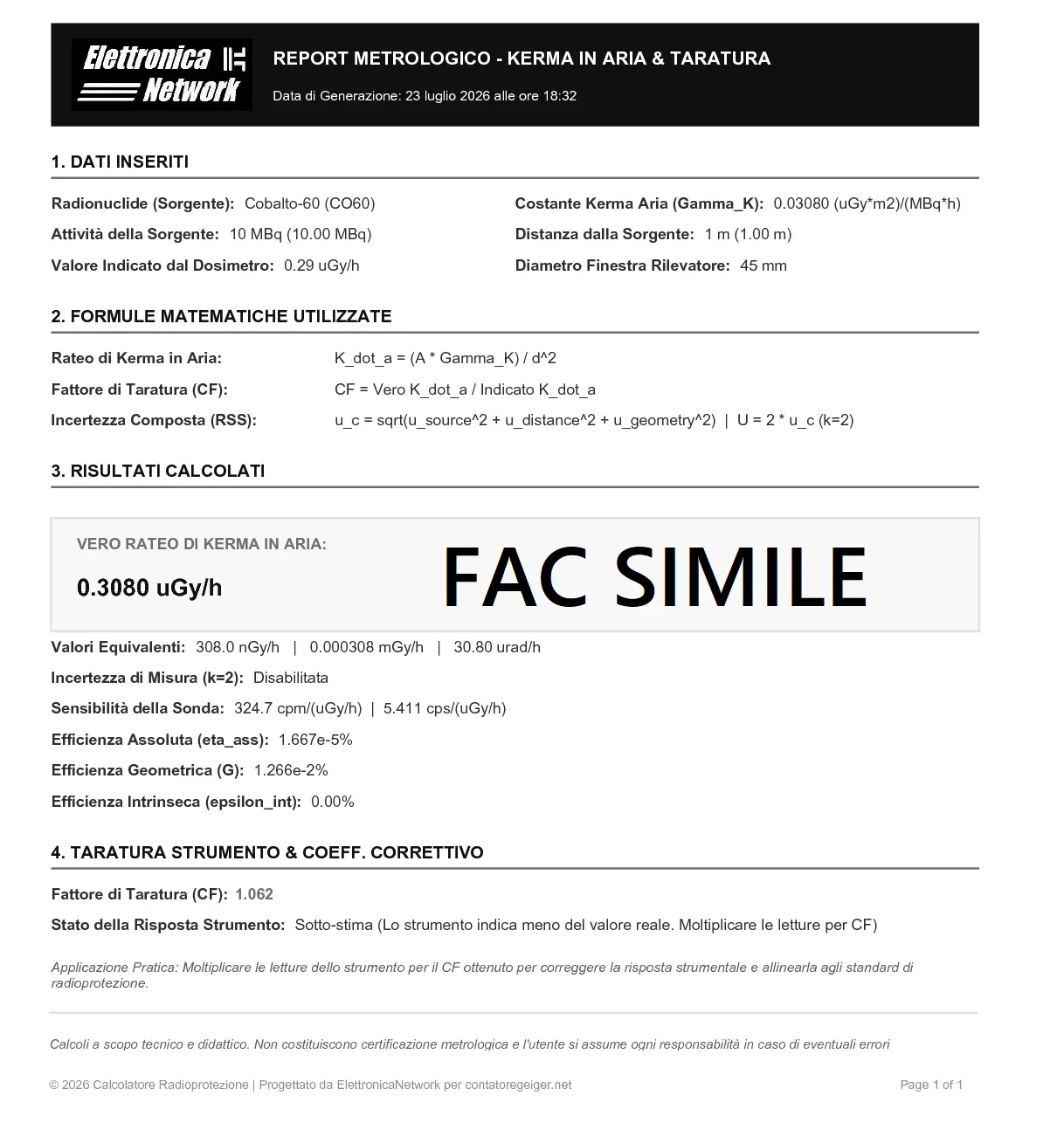
- Added Option “Genera Report PDF” (see an example below), with Professional A4 Layout, via a fully localized action button in the selected language, located at the bottom of the Kerma dashboard & Calibration.
- 📊 Complete Report Data, The generated PDF report captures a complete snapshot of the active calculation:
Measurement simulator with the Geiger-Müller counter
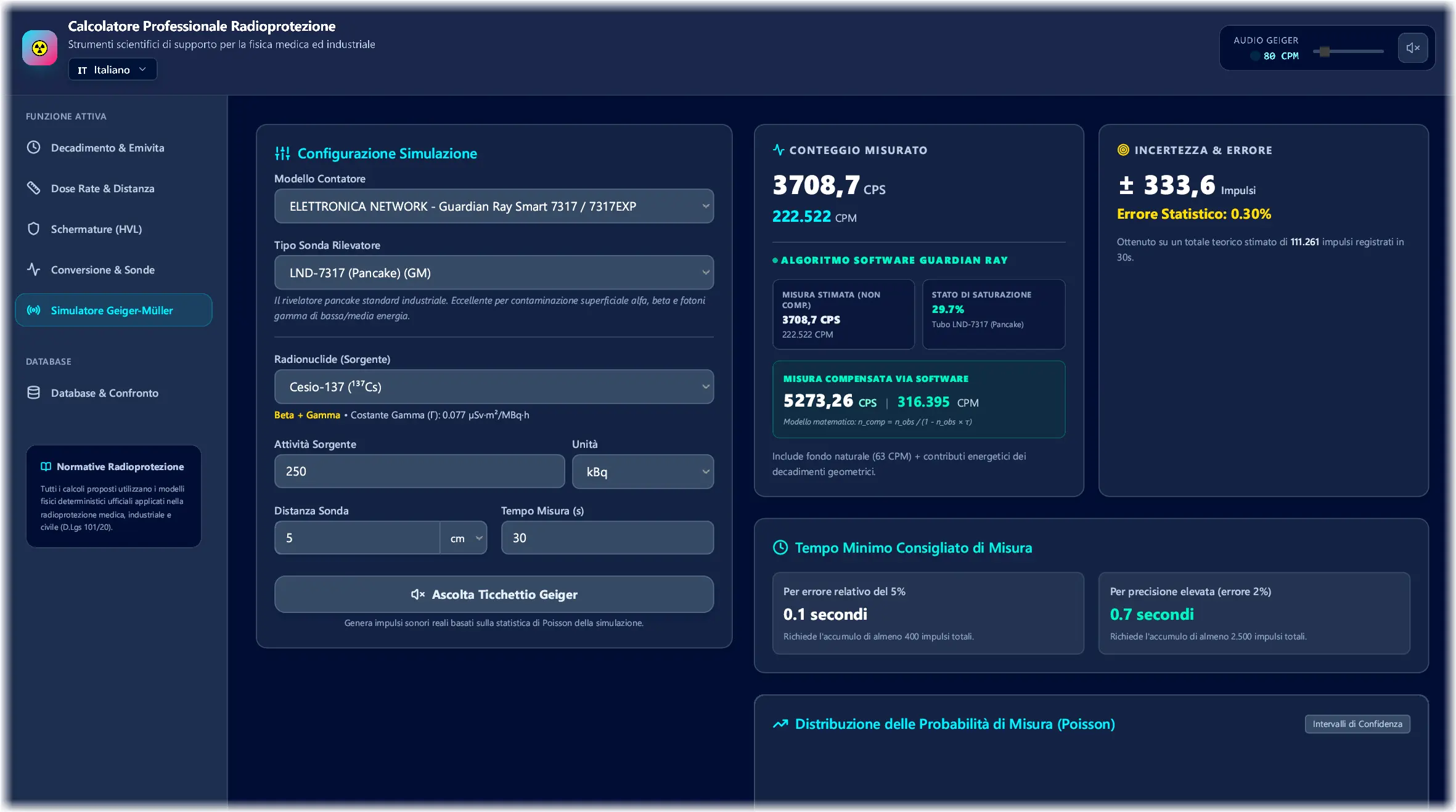
One of the most innovative features of the platform is the Geiger-Müller Measurement Simulator, developed to realistically reproduce the behavior of the main Geiger Counters available on the market.
The simulator allows you to select numerous commercial models, both professional and economical, calculating the theoretical performances on the basis of the real characteristics of the installed Geiger-Müller probes.
The simulation takes into account parameters such as:
- type of probe;
- sensitive surface;
- sensitivity to alpha radiation, beta, gamma and X-rays;
- geometry of the entrance window;
- detection efficiency;
- source activity;
- measuring distance;
- acquisition time.
The user can compare the behavior of different instruments in the same operating conditions, understanding how the choice of probe significantly influences the quality of the measurements.
Advanced simulation of Geiger-Müller tube saturation
For the model we produce Guardian Ray Smart 7317 / Guardian Ray Smart 7317 EXP An exclusive simulation is available that reproduces the behavior of the software saturation compensation developed by ElettronicaNetwork.
During measurements carried out in the presence of high radiation fluxes, all Geiger-Müller tubes progressively begin to lose pulses due to the intrinsic dead time of the detector.
The simulator shows in real time:
- tube saturation percentage;
- theoretical counts without compensation;
- correct counts using proprietary algorithm;
- difference between measured value and actual value;
- trend of the error as the source activity increases.
This function allows you to understand the importance of electronic and software compensation techniques adopted in professional systems to extend the operating range of the detector and improve the accuracy of measurements.
Emulatore Audio Geiger
The platform also integrates an audio emulator that faithfully reproduces the characteristic acoustic operation of a Geiger Counter.
The synthesizer generates random pulses according to a Poisson statistical distribution, realistically simulating the physical behavior of a Geiger-Müller tube during radioactivity measurement.
The intensity of the radioactive activity automatically changes the frequency of the sound pulses, offering an extremely realistic representation of the phenomenon.